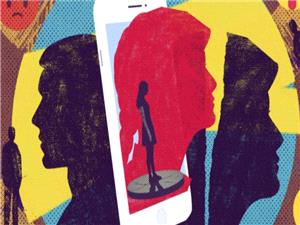
Arya News - From who gets to be visible historically to which version of a woman appears first in a search result today, patriarchal narratives continue to dominate.
DHAKA – In an alley of Fez’s old medina stands the world’s oldest university. Recognised by UNESCO and Guinness World Records as the oldest existing and continuously operating university, it is remarkable for another reason. The person credited with founding it is a woman — Fatima bint Muhammad al-Fihriya al-Qurashiyya, known more simply as Fatima al-Fihri. Legend says this daughter of a wealthy merchant used her inheritance to purchase land in the heart of Fez and build a mosque. As with many ancient mosques, teaching and scholarship likely took place at al-Qarawiyyin from the very beginning, until 1963, when a royal decree formally transformed it into a university.
The legend continues that Fatima’s sister, Maryam al-Fihri, about whom we hear even less than Fatima, built the Andalusiyyin Mosque, also in central Fez. Together, they are said to have turned the grief of their father’s passing into institutions that shaped minds, culture, and history.
The romantic in me wants to imagine that a city which proudly claims itself as the world’s spiritual and intellectual capital has been shaped as much by the hands of women as by the swords of sultans. But much to my disappointment, a quick glance at Wikipedia tempers that fantasy, suggesting Fatima and Maryam may be just that: legends. As one Frenchman and one Englishman note, the perfect parallelism of two sisters and two mosques is “too convenient.” But then the critic in me wonders: are they really myths, or is this another familiar act of erasure?
We have witnessed similar erasure closer to home, with our very own Borendro queen — Rani Bhabani — and her daughter Tara Bibi, who exist more in folklore than in fact, hardly remembered with as much reverence as they should be despite managing a 34,000-square-kilometre zamindari with remarkable efficiency. The pattern is consistent across continents. When women build, the structure often endures, but the name is remembered only in fragments.
Erasure is violence; an epistemic one. It determines whose knowledge counts, whose identity is preserved, and whose contributions can be quietly removed without destabilising the larger story. And whether it is the myth where Lilith is erased and Eve is reduced, or the historical record that obscures Fatima and Maryam, history has done a terrible disservice to herstory.
In theory, the digital age was meant to correct this. An open, democratised space. Borderless, decentralised, accessible. A place where voices that history neglected could finally speak without gatekeepers, creating archives that could not be burned. A platform that did not privilege lineage, geography, or gender. A realm where someone like Fatima al-Fihri, the half historical figure and half contested footnote, might have found her rightful visibility and acclaim.
But the promise and the practice diverged quickly. A space designed for equality has become one of the most unequal terrains for women.
The digital space, which should have unsettled hierarchies, has instead operationalised them. While the architecture of the internet appears neutral, the cultures that animate it are not. Algorithms appear impartial, but they learn from historical bias. Technology, supposedly progressive, rarely reflects the people most affected or harmed by it. The digital world erases through distortion much as historical records erased through omission. From who gets to be visible historically to which version of a woman appears first in a search result today, patriarchal narratives continue to dominate.
And where past societies lacked the tools to verify truth, the present lacks the governance to protect it. The absence of laws, or the slowness of laws to adapt, has produced a new frontier of vulnerability. In most countries, deepfakes remain unregulated. Non-consensual image-sharing is inconsistently criminalised. Harassment is rarely treated as real harm. Your data, your image, your likeness can be taken, edited, circulated, and weaponised without your knowledge. Platforms meanwhile operate as both publisher and bystander: unwilling to intervene, unwilling to accept liability, unwilling to acknowledge that the “digital” in digital violence does not diminish the violence.
This is the context within which the 2025 theme for the 16 Days of Activism, UNiTE to End Digital Violence Against All Women and Girls, emerges. More than a campaign about online abuse, it recognises that a seemingly egalitarian space has become a site where women’s identities are most malleable, most contested, and most easily rewritten. Digital violence is the contemporary expression of the same logic that erased Fatima al-Fihri from historical certainty, turned Lilith into a demon, and reduced Eve to a cautionary tale.
What the analogue world limited through absence, the digital world now threatens through excess. One erased slowly; the other overwhelms instantly. The result, however, is unchanged: a woman’s vulnerability is underscored by her mere existence, regardless of participation.
The mechanisms of distortion have evolved faster than law, faster than public perception, and faster than the safety nets needed to protect girls who are growing up in spaces never designed with them in mind. Recent numbers reflect this acceleration.
UN Women reports that 85 percent of women have witnessed digital violence globally. The 2024 National Violence Against Women Survey conducted by the Bangladesh Bureau of Statistics and UNFPA confirmed that technology-facilitated violence is now a distinct and measurable category. Civil society groups have also documented a sharp rise in AI-enabled abuse, including deepfakes, manipulated images, and blackmail, particularly since 2024. Even police and cybercrime monitors note that nearly one-quarter of cybercrime complaints involve harassment or unauthorised takeovers of women’s social media accounts. Over these last 16 days, women online have begun sharing the number of harassing comments they receive in a single week through the digital campaign #mynumbermystory. Some women report numbers as high as ninety-five.
Younger girls, fluent in digital expression but poorly protected by law, now enter a landscape where experimentation, missteps, and self-discovery carry disproportionate risk. Girls aged eleven to sixteen are among the fastest-growing targets of deepfake-based attacks. Strikingly, these patterns persist despite Bangladesh’s significant gender gap in smartphone and internet access, underscoring that digital violence does not require high usage to be pervasive.
These numbers illustrate an environment where equality was assumed but never built. A space imagined to expand women’s presence has instead produced new conditions under which that presence is constantly threatened: where images can be stolen, identities duplicated, and voices drowned out by coordinated harassment or algorithmic bias. The danger now is not only that women are erased, but that versions of them become more durable than the true ones. A woman’s mutable, replicable, infinitely reproducible digital self can outlive her actual voice.
This is the centuries-old inheritance women enter when they step into digital spaces. They are visible but not necessarily seen. Present but not necessarily believed. Documented but not necessarily remembered in the form they choose.
So, like all campaigns, this year’s 16 Days must go deeper than platforms or policies. It must interrogate the cultural inheritance that made digital violence inevitable: the longstanding comfort with women’s disappearance, the willingness to believe versions of them, the historical habit of treating their stories as expendable. The digital space did not fail on its own. It inherited a script and followed it.
Fatima built an institution that survived empires. Maryam may have too. Yet, while the intellectual legacy persisted, their identities exist in fragments, partially recorded, partially surmised, partially doubted. A woman can alter the trajectory of education for centuries and still remain an afterthought in the story of that change.
Reclaiming space, then, requires more than safety tools or legal reforms. It requires returning to the question Fatima al-Fihri’s story raises: what does it take for a woman’s contribution to be seen, named, remembered?
If the internet was envisioned as a more egalitarian space, reclaiming it requires deliberate construction. Historical reclamation and digital reclamation are parallel tasks. Both demand infrastructure. Both demand governance. Both demand that women’s identities be treated as non-negotiable.
The digital world is now the largest space we inhabit. Therefore, reclaiming it is more than merely symbolic. It requires law, literacy, regulation, and cultural unlearning. It is structural. And it requires seeing women as authors of their own representation, not simply figures to be interpreted.
The question for our time is perhaps simpler than building institutions that survive across millennia: can we build a digital world where women are not erased — not historically, not synthetically, not at all?
If the past is any indication, visibility is never guaranteed. It must be constructed, protected, and insisted upon.
But unlike Fatima and Maryam, women should not have to build this world alone. Reclaiming digital space is not a task for women to shoulder individually; it requires reshaping the cultural reflexes that make their erasure unremarkable. The responsibility belongs as much to legislators, platform architects, and educators as to the women whose voices are at risk.
Fatima al-Fihri built quietly and deliberately, without waiting for permission. Reclaiming digital space will require the same. But this time, collectively.
Shagufe Hossain is a freelance gender justice practitioner. She founded Leaping Boundaries Foundation to raise the visibility of female madrasah students on platforms where they are underrepresented.