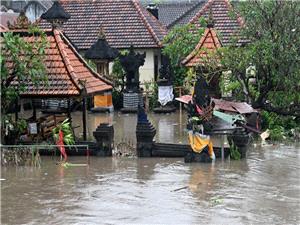
Arya News - The discovery of the new cyclone seed 93S has garnered widespread public attention, particularly since the country has yet to recover from devastating floods and landslides in northern Sumatra that were caused by the rare Cyclone Senyar and worsened by environmental degradation.
JAKARTA – Several regions in southern Indonesia are bracing for potential floods, landslides and extreme weather following the discovery of a new cyclone seed that has already affected Bali and West Nusa Tenggara (NTB), heightening urgency for disaster preparedness.
The Meteorology, Climatology and Geophysics Agency (BMKG) is currently monitoring the cyclone seed 93S that was first detected last Friday in the Indian Ocean, south of East Java, Bali, NTB and East Nusa Tenggara (NTT).
The weather agency has since warned of rising rainfall intensity and stronger wind in these four provinces, urging people to remain vigilant over potential extreme weather and high waves in coastal areas.
The latest forecast from the BMKG on Monday predicted that the cyclone seed would not intensify into a full-fledged cyclone at least in the next 24 hours. The forecast is updated daily by the agency.
But National Research and Innovation Agency (BRIN) senior climatologist Erma Yulihastin said on X on Sunday that the agency’s climate and weather monitoring system Kamajaya had predicted that the cyclone seed might develop into a full-fledged cyclone and make landfall in NTT during the period of Jan.1 and 10 next year.
The post, which gained more than 1 million views on Monday, includes an infographic containing possible risks posed by the cyclone, such as extreme rainfall intensity, prolonged storm events, floods and landslides.
The discovery of the new cyclone seed 93S has garnered widespread public attention, particularly since the country has yet to recover from devastating floods and landslides in northern Sumatra that were caused by the rare Cyclone Senyar and worsened by environmental degradation. The disaster had killed at least 1,030 people across three provinces in Sumatra by Monday.
Upon receiving information on the new cyclone seed, the National Disaster Mitigation Agency (BNPB) has urged local administrations in East Java, Bali, NTT and NTB to regularly identify potential disaster risks, disseminate information and prepare their emergency preparedness and response measures.
“So that regions forecasted to be affected by the cyclone can propose a [provincial] emergency status,” BNPB spokesperson Abdul Muhari said, adding that such a status will allow the central government to assist the regions in need for emergency equipment, personnel and budgets.
Early on Sunday morning, flash floods swept through several locations in the resort island of Bali, including two districts in its capital Denpasar and Badung regency, following persistent and heavy rains that were triggered by the cyclone seed 93S.
According to the BNPB, at least 191 households in Denpasar were affected by the flood.
The flooding has killed a foreigner in the North Kuta district in Badung, while hundreds of people had been evacuated using rubber boats over the weekend, Antara reported.
Floods caused by heavy rains reportedly inundated several locations in West Sumbawa regency in NTB on Sunday, while high waves occurred in several areas in NTT in recent days.
“More rainfall and stronger winds are expected in several regions. But the cyclone seed has so far been moving southbound [off Indonesia] and is relatively weak,” said Deni Septiadi, a meteorologist from the State College of Meteorology, Climatology and Geophysics (STMKG).