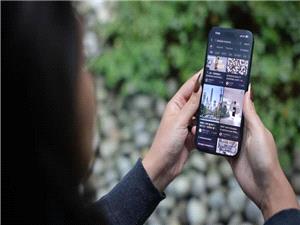
Arya News - Taiwan’s rare move on Dec 4 to block the popular app has triggered a severe backlash among users, in a democracy that prides itself on protections for freedom of expression.
TAIPEI – Taiwanese manicurist Hsiao Hsiu-yu is worried about the day she gets cut off from Chinese social media app Xiaohongshu .
The 31-year-old, who scrolls through the Instagram-like platform daily for nail design inspirations, said it is already happening to some of her peers.
“None of my friends is using the app to look at politically sensitive information – it’s absurd that the government wants to stop us from using it,” she told The Straits Times.
Taiwan’s rare move on Dec 4 to block the popular app has triggered a severe backlash among users, in a democracy that prides itself on protections for freedom of expression.
Across various social media platforms and online forums, disgruntled Taiwanese users are exchanging tips for workarounds, such as how to use virtual private network services or whether one should update their mobile operating systems.
Recent checks in Taipei showed that the app could still be opened by many users, although some say their app’s pages are either loading very slowly or not in their entirety. While local internet service providers have been ordered to block access to the app, the app cannot be shut down at once as Xiaohongshu owns many internet protocol addresses.
Taiwan’s Ministry of the Interior on Dec 4 announced an immediate one-year ban on Xiaohongshu, also known in English as Rednote, calling it a potential “high-risk area for online shopping fraud”.
The authorities linked the platform to 1,706 fraud cases that caused financial losses of more than NT$247.7 million (S$10.2 million) since 2024, and said that the company, which lacks a local office as required by Taiwan law, was refusing to cooperate in addressing the government’s concerns.
“From our perspective, it is a malicious platform – one that is beyond legal oversight and operates with unclear intentions,” said Deputy Interior Minister Ma Shih-yuan at a recent press conference.
Opposition politicians, however, have said the measure is politically motivated, amid an indiscriminate hostility against anything China-related by the ruling Democratic Progressive Party (DPP), which champions a distinct Taiwanese identity.
“Taiwan’s long-prized internet and speech freedoms have now been suppressed and strangled by the DPP under the banner of national security,” said Ms Cheng Li-wun, chair of Taiwan’s main opposition party Kuomintang, which favours warmer relations with Beijing.
China’s Taiwan Affairs Office spokesman Chen Binhua said in a Dec 10 presser that Xiaohongshu is “deeply loved” by Taiwanese, especially younger users, for its community and content. He also rejected Taipei’s justification that the ban was needed to curb online fraud.
“What the DPP authorities deem ‘anti-fraud’ is actually ‘anti-democracy’,” he said.
Xiaohongshu has roughly three million active users in Taiwan, with its core demographic being young women aged 18 to 24.
Several experts told ST that the fierce backlash in Taiwan demonstrated how the government had failed to communicate its policy more clearly to the public.
“It’s not actually a case of censorship because other bigger Chinese social media apps like TikTok are still being allowed,” said Associate Professor Huang Jaw-nian, an expert in media influence operations at Taipei’s National Chengchi University.
“But the government should do better to explain its reasons if it hopes to convince the public that it’s being done on the grounds of cybersecurity and that it’s not an infringement on the freedom of speech,” added Prof Huang.
Experts noted that the ban is a result of the app’s refusal to follow Taiwanese rules.
According to the Interior Ministry, major international platforms, including TikTok, have appointed legal representatives in Taiwan, complied with local regulations and fulfilled their legal obligations. TikTok has also removed more than 10,000 items of fraudulent content at the government’s request, it added.
Shanghai-based Xiaohongshu, on the other hand, failed to respond to an October request to address fraud concerns and to submit a plan to improve its cybersecurity measures. It also has yet to set up a legal presence in Taiwan, and lacks contacts for law enforcement to reach.
Professor Yeh Yao-yuan, a Taiwan studies expert at the University of St Thomas in Houston, Texas, said: “Any social media platform operating in Taiwan should comply with government regulations and work with the government to prevent fraudulent activities. However, Xiaohongshu is completely disregarding our government.”
The ban also comes amid growing concerns among governments worldwide over cybersecurity gaps and influence campaigns associated with fast-growing Chinese apps like Xiaohongshu and TikTok.
In 2020, India banned close to 60 Chinese apps over similar concerns. In the US, TikTok’s Chinese owner, Bytedance, has been ordered to sell its US operations or face a ban , over fears that Beijing could force the company to hand over data on American users.
But while the bulk of the content on Xiaohongshu is not politically focused but lifestyle-oriented – such as travel and food recommendations, or make-up and fashion advice – experts say soft political propaganda can be delivered via seemingly innocuous content.
“It seems harmless, but what if a beauty influencer keeps pushing ideas including how Chinese make-up products are better than Taiwanese products, and then use that to talk about how China is better than Taiwan in other ways?” said Prof Huang.
In 2023, for instance, dozens of Chinese beauty influencers on the app wore hair and make-up to look like “ocean elves” to talk about how Japan’s discharge of treated Fukushima nuclear wastewater could be potentially harmful to marine ecosystems and human health. Such narratives were aligned with Beijing’s stance on the issue.
“Xiaohongshu has to follow China’s strict censorship guidelines, which means that you can see only content that is favourable to the Chinese government,” added Prof Huang.
In 2022, a leaked internal document revealed that Xiaohongshu was actively censoring discussions deemed controversial by Beijing, including “sudden incidents” such as political disturbances or natural disasters.
Ms Hsiao, the manicurist, only hopes that the ban will be lifted soon.
“No other app is as user-friendly or fun when it comes to beauty and lifestyle content, not even Instagram. I just want to use Xiaohongshu for my business,” she said.