Arya News - Bhutan joined other developing nations in calling for a clear and predictable pathway for the new global climate finance al, known as the New Collective Quantified Goal. Countries are negotiating a target of at least USD 300 billion by 2035, with adaptation finance to be tripled.
THIMPHU – At a time when global cooperation is strained and the first Global Stocktake shows the world drifting off course from the 1.5°C target, Bhutan used the 30th UN climate conference (COP30) to reaffirm its long-standing moral position, countries that have contributed least to the climate crisis should not bear its heaviest impacts.
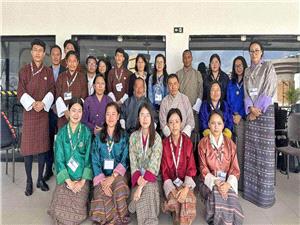
Led by Energy and Natural Resources Minister Lyonpo Gem Tshering, Bhutan’s delegation joined nearly 200 countries in Belém from November 10 to 21. The Department of Environment and Climate Change (DECC) coordinated Bhutan’s engagement across key negotiation tracks, including climate finance, adaptation, just transition, technology transfer, and carbon markets.
Delivering the national statement on November 17, Lyonpo Gem Tshering reminded global leaders that Bhutan has protected its forests, kept emissions extremely low, and made difficult development choices in favour of environmental protection despite minimal responsibility for the crisis.
“The principle of climate justice is not a slogan but a matter of survival for vulnerable nations,” he said, emphasising that the 1.5°C threshold remains a life-or-death limit for Bhutan, where melting glaciers, erratic monsoons, and landslides are becoming more frequent and severe. “The cost of inaction rises every year.”
He also shared Bhutan’s emerging model for sustainable development, the Gelephu Mindfulness City, as a vision balancing economic growth with environmental responsibility, presented as an example of development anchored in well-being and low-carbon growth.
While reaffirming its pledge to remain carbon neutral, Bhutan stressed that continued ambition depends on accessible finance, technology, and international cooperation.
A heavy negotiation agenda
Throughout two weeks, Bhutan’s team participated in discussions on adaptation, loss and damage, finance, transparency, just transition, carbon markets, and technology.
The delegation worked closely with the G77 and China and other climate-vulnerable countries to push for outcomes addressing developing nations’ realities.
A significant outcome was the adoption of 59 global indicators for the Global Goal on Adaptation. Over the past two years, experts from around the world, including one from Bhutan, worked to streamline more than 9,000 suggested indicators to a final set of 59.
Carbon markets enter a new phase
After years of negotiation, countries operationalised the Paris Agreement Crediting Mechanism, which will govern the generation and trade of carbon credits under Article 6.4. Parties agreed to accelerate infrastructure development and expand capacity-building but also noted a serious funding shortfall.
Although many technical issues were resolved, some, such as finalising methodologies for removals, were deferred to future meetings.
COP30 also marked the formal closure of the Clean Development Mechanism (CDM), the carbon market established under the Kyoto Protocol.
For Bhutan, the CDM holds special significance, the Dagachhu hydropower project became the world’s first cross-border CDM project, demonstrating that carbon markets could benefit developing countries.
The closure decision sets final deadlines for all CDM activities and ensures that data and remaining credits are safeguarded.
Push for climate finance
Bhutan joined other developing nations in calling for a clear and predictable pathway for the new global climate finance goal, known as the New Collective Quantified Goal. Countries are negotiating a target of at least USD 300 billion by 2035, with adaptation finance to be tripled.
For Bhutan, these negotiations have had tangible impacts. Last year, close coordination between the DECC and the Ministry of Finance helped secure USD 15 million through the Least Developed Countries Fund, part of Bhutan’s USD 20 million allocation.
Loss and damage fund opens its first call
A major outcome was the first call for funding requests from the Loss and Damage Fund, established after three decades of negotiations. Bhutan served on the transitional committee that shaped the fund’s creation.
The fund now enters its first operational phase with USD 250 million allocated for the financial year 2025–2026. Half of this amount is earmarked for least developed countries.
For Bhutan, which faces increasing risks from glacial lake outburst floods and climate-triggered disasters, this marks a critical opportunity to access support for recovery and resilience.
The DECC has already begun working with local partners to assess loss and damage and build national capacity to navigate the new fund.
A global framework for just transition
One of COP30’s most anticipated decisions was the establishment of the Just Transition Mechanism, the first global framework to support countries shifting to low-carbon economies without leaving workers and vulnerable communities behind.
The mechanism aims to provide technical assistance, capacity building, and access to finance while avoiding additional debt burdens.
In Bhutan, a just transition connects directly to the 21st Century Economic Roadmap and the Gelephu Mindfulness City concept, both of which aim to create an economy rooted in sustainability, resilience, and low-carbon development.
Technology transfer gains momentum
Countries agreed to launch the Belém Technology Implementation Programme, which will help developing nations overcome common obstacles in adopting climate-friendly technologies. The programme will support innovation systems, policy integration, project development, and resource mobilisation.
The mandate of the Climate Technology Centre was extended to 2041, and a global process to select a new host institution will begin immediately. The centre’s renewed role includes stronger support for developing countries in accessing technical assistance, improving enabling environments, and preparing bankable technology projects.
“Mutirão”: a rare moment of consensus
Perhaps the most symbolic outcome of COP30 was the “Global Mutirão” decision, named after the Brazilian word for collective community work. The decision bundled four long-stalled negotiation areas – mitigation ambition, finance, trade-related measures, and transparency, into a single political declaration.
The text states plainly that the global shift toward low-emission, climate-resilient development is now “irreversible.” It notes that investments in renewable energy already surpass fossil fuels two-to-one, and emphasises that climate action brings jobs, economic security, and better health outcomes. For many delegates, the Mutirão signalled renewed faith in multilateral cooperation.
Bhutan helps launch LLDC climate negotiation group
A major diplomatic milestone for Bhutan came with the launch of the Landlocked Developing Countries (LLDC) climate negotiation group. Bhutan co-organised the event with Bolivia, the current global chair, and the UN Office of the High Representative for the Least Developed Countries, Landlocked Developing Countries and Small Island Developing States (UN-OHRLLS).
Representing 32 countries and more than 600 million people, the group became the third special negotiating bloc under the UNFCCC, joining the LDCs and small island states. LLDCs face unique vulnerabilities—geographic isolation, high transport costs, limited trade access, and growing climate threats such as droughts, food insecurity, and water stress.
Bhutan, a mountainous country exposed to glacial melt and flash floods, now serves as the group’s coordinator for climate. At the closing plenary, Bhutan delivered the LLDC’s first formal intervention, urging countries to ensure accessible and grant-based climate finance and warning that the 1.5°C goal will not hold without stronger support for the most vulnerable.
Bhutan showcases carbon market readiness
Bhutan hosted a well-attended side event on carbon market readiness on November 17. Officials outlined the country’s progress in setting up a high-integrity carbon market aligned with the Paris Agreement.
Key achievements include the Bhutan Carbon Market Rules 2023, a National Carbon Registry, the Bhutan Climate Fund, and the first Article 6.2 bilateral agreement with Singapore.
The session also highlighted Bhutan’s mitigation potential analysis, which identified 88 possible projects across energy, transport, waste, livestock, agriculture, and industry. Delegates from several countries and organisations expressed interest in collaborating with Bhutan on high-quality carbon projects.
Two days later, during the Singapore Evening Event, Bhutan and Singapore formally launched the first call for carbon market project applications. Applications will open on December 1, with project developers invited to submit proposals under the agreed procedures.
Singapore’s Environment Minister, Grace Fu, said Bhutan’s strong safeguards, governance systems, and environmental track record make it a trusted partner for developing credible carbon assets.