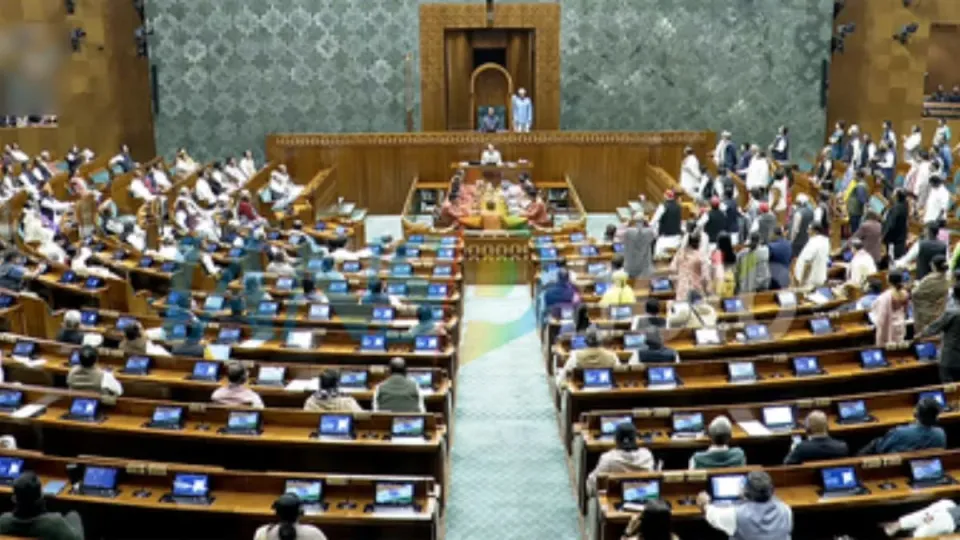
Arya News - The session’s first week, beginning December 1, was marked by relentless disruptions led by the Opposition, demanding urgent debate on the Special Intensive Revision (SIR) of electoral rolls—a contentious exercise by the Election Commission across 12 states and UTs.
NEW DELHI – The Winter Session of Parliament, which erupted into a storm of protests and adjournments in its opening week, geared up for a decisive second week starting Monday December 8. A breakthrough all-party consensus has cleared the legislative roadblock, setting the stage for an intense focus on both symbolic and high-impact discussions.
Flashpoint Week One: The SIR protests shake parliamentary floors
The session’s first week, beginning December 1, was marked by relentless disruptions led by the Opposition, demanding urgent debate on the Special Intensive Revision (SIR) of electoral rolls—a contentious exercise by the Election Commission across 12 states and UTs. Leader of the Opposition in the Rajya Sabha Mallikarjun Kharge pushed for priority debate under Rule 267, citing it an “urgent matter” while the government sought a broader, less time-bound discussion on electoral reforms.
The deadlock led to heated exchanges, walkouts, and additional Opposition concerns over Booth Level Officers’ (BLOs) deaths and national security risks. Despite the turbulence, the Upper House welcomed Vice-President CP Radhakrishnan as Rajya Sabha Chairman and shared a rare moment of unity celebrating Indian sports achievements.
Week Two Agenda: Vande Mataram tribute and electoral reform talks
An all-party meeting chaired by Lok Sabha Speaker Om Birla charted a packed agenda:
December 8: A 10-hour special debate on the 150th anniversary of the national song ‘Vande Mataram’, with Prime Minister Narendra Modi opening and Defence Minister Rajnath Singh concluding the discussion. Congress MPs, including Priyanka Gandhi Vadra, will participate.
However, the IndiGo fiasco is likely to mar the proceedings of the two Houses on Monday, with Opposition members expected to rent their ire on the sudden massive flight disruptions.
Over 1,000 IndiGo flights were cancelled, leaving thousands of passengers stranded across India. The airline has apologized for the inconvenience and promised to refund passengers and provide accommodations.
December 9: The government agreed to an immediate discussion on election reforms, interpreted as the Opposition’s platform to address the SIR controversy, marking a pivotal political compromise to keep the session on track.
Legislative and Financial Push Amid Political Drama
Despite political clashes, Parliament advanced key bills underscoring the government’s reform drive:
Central Excise (Amendment) Bill, 2025, allowing higher tobacco duties post-GST cess expiry
Manipur GST (Second Amendment) Bill, 2025, aligning with GST Council decisions
Health Security and National Security Cess Bill, 2025, passed in Lok Sabha as a Money Bill
Additionally, the government unveiled supplementary demands for an extra Rs 41,455 crore in spending for 2025-26, focusing on fertiliser and petroleum subsidies, with related appropriation bills slated for discussion and voting.
Looking Ahead: Ambitious Reform Bills Await
The 15-sitting session, concluding December 19, will also consider transformative legislation including:
Atomic Energy Bill, 2025, potentially opening civil nuclear sector to private players.
Higher Education Commission of India Bill, 2025, creating a unified regulator
Securities Markets Code Bill, 2025, consolidating securities laws
Insurance Laws (Amendment) Bill, 2025, impacting FDI limits
Amendments to Insolvency and Bankruptcy Code and Corporate Laws
With the electoral reform deadlock resolved, Parliament now pivots fully to delivering on an ambitious legislative and financial agenda critical to the government’s reform roadmap.